

What would the energy transition look like if women were equally represented at the top?
It’s a question that matters, not just for fairness, but for better decision-making and stronger outcomes. In partnership with POWERful Women, Acre continues the blog series uncovering the stories, barriers, and breakthroughs shaping female leadership across the energy sector. Our next guest is Maria Schley, a project leader at EnBW.
Maria is part of the leadership team for the business development of offshore hydrogen at EnBW. An engineer herself, Maria has held a range of project leadership positions within EnBW, throughout her career, working across different technologies like energy storage, offshore wind and hydrogen.
How did you enter engineering studies and build your internal career over more than 18 years at EnBW?
My career path began while I was still at school, as I was preparing for my A-levels in Germany and considering what to do next. Career guidance tools consistently pointed me towards engineering, even though I initially had only a vague understanding of what that involved and no strong interest in purely technical work.
Besides maths, my interests were in biology and chemistry, which led me to process engineering. The discipline combines technical systems with chemical and biological processes and proved to be an excellent fit. I studied mechanical engineering with a focus on process engineering, building a solid technical foundation aligned with my interests.
During my studies, I developed a growing interest in the energy sector. The scale of technological, economic and political change made it clear that this was an area where engineering could have meaningful impact. After graduating, I joined EnBW and began working directly on projects supporting the energy transition.
For more than 13 years, I have worked in offshore wind, leading the construction of new power plants. Over time, my responsibilities expanded to include work package leadership and the management of international teams on projects involving multi-billion-euro investments. These roles gave me a comprehensive understanding of large-scale project development, from regulation and financing through to execution.
Today, I am moving into a more strategic role, focusing on future energy systems, including hydrogen production combined with offshore wind. This next phase builds on my technical background and project experience while contributing to the next stage of the energy transition.
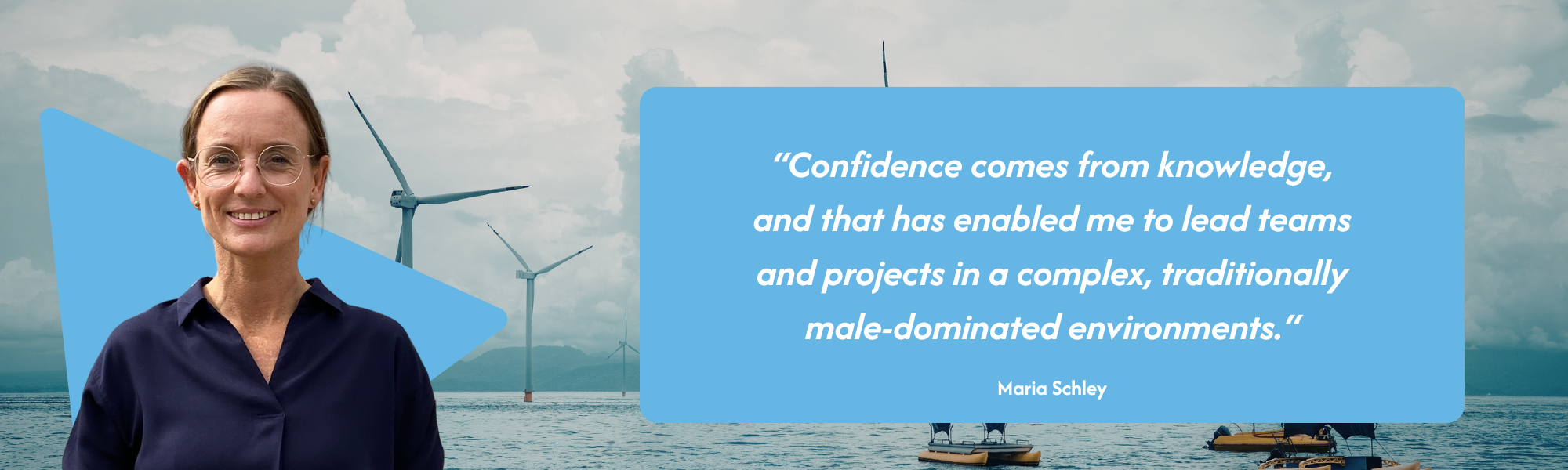
Throughout my career, technical expertise and clear accountability have been central to effective leadership. Confidence comes from knowledge, and that has enabled me to lead teams and projects in complex, traditionally male-dominated environments.
In all of years at EnBW, what has the representation been between males and females and how was leading a technical project?
Leading a technical project also means leading people. As a technical lead, my role extended beyond engineering expertise to guiding a team and navigating complex project dynamics. The team was almost entirely male, and the wider project environment was similarly male-dominated.
In that context, technical credibility was essential in establishing acceptance, but it was not enough on its own. Effective leadership relied just as much on communication, situational awareness and the ability to work constructively with people. Project leadership covers a variety of skills, including psychological aspects in addition to technical competence.
Some project structures added further complexity. An example of this was a joint venture involving multiple companies, each with its own culture, leadership style and level of experience in offshore wind. Aligning expectations across management, partner organisations and the project team required continuous adjustment and clear, consistent communication.
I never felt insecure in my role. The challenge was not my position as a woman, but the overall project constellation and the absence of consistent guidance across organisations. In such environments, leadership often means creating clarity where little exists, by forming your own judgement, asking the right questions and setting a clear direction for the team.
Ultimately, technical leadership brings together engineering expertise, communication skills and an understanding of how organisations function. Even in complex and at times chaotic settings, these conditions offer opportunities to strengthen both teams and leadership capability.
Have you ever felt any biases from your team members because you are a woman?
In one of the projects, I encountered difficulties with a senior male colleague who consistently resisted my responsibility. It was unclear whether this stemmed from my role, my company affiliation, or unconscious bias towards a female technical lead. After several attempts to align expectations and adapt to his working style, I was close to escalating the matter, but the situation resolved itself when the colleague left the project shortly afterwards.
The experience highlighted how difficult it can be to distinguish unconscious bias from differences in personality or organisational culture. Regardless of the source, the impact on collaboration and effective leadership was tangible.
What suggestion would you have for this gender biases and gap to close?
Increasing gender diversity in leadership isn’t only about meeting targets; it’s about shifting mindsets. Teams long dominated by men often change their dynamics when a woman joins, bringing fresh perspectives and different ways of working. This isn’t about making men and women behave the same; it’s about embracing diversity and challenging unconscious biases. Over time, these shifts benefit both organisations and society as a whole.
Another aspect of gender equality is balancing family and career. This is a challenge for both women and men. While part-time work has traditionally been accepted for women raising children, men are only now starting to receive similar recognition. True equality means men should feel supported in taking parental leave or part-time roles without fear of career repercussions, just as women should be free to pursue full-time work if they choose.
What advise would you give to a young woman starting in the energy sector?
Technical skills are essential in the energy sector, but understanding company strategy, negotiation, stakeholder management, and networking is equally important. Developing soft skills early—such as communication and decision-making—is crucial for navigating the environment effectively. Cultivating these alongside your technical growth lays the foundation for long-term success.
How would you suggest achieving equality in the energy transition?
Equality isn’t just about numbers; it’s about skills, personalities, and how people collaborate. Understanding business, communication, and team dynamics helps anyone succeed, regardless of gender. True success comes from being recognised for your capability, not merely your demographics.
Acre is committed to driving meaningful change within the energy sector, focusing on appointing impact-driven leaders that can create a more inclusive and sustainable industry. Our interest in this topic stems from a belief that diversity in leadership is essential for better decision-making, stronger business outcomes, and achieving a fairer energy transition. Through this blog series, in partnership with POWERFul Women, we will continue to explore the challenges, successes, and strategies around female representation in energy leadership. Each interview and insight will shed light on what’s working, what needs to change, and how the sector can accelerate progress for the next generation of leaders. Please reach out if you are interested in learning more.